 XPC Water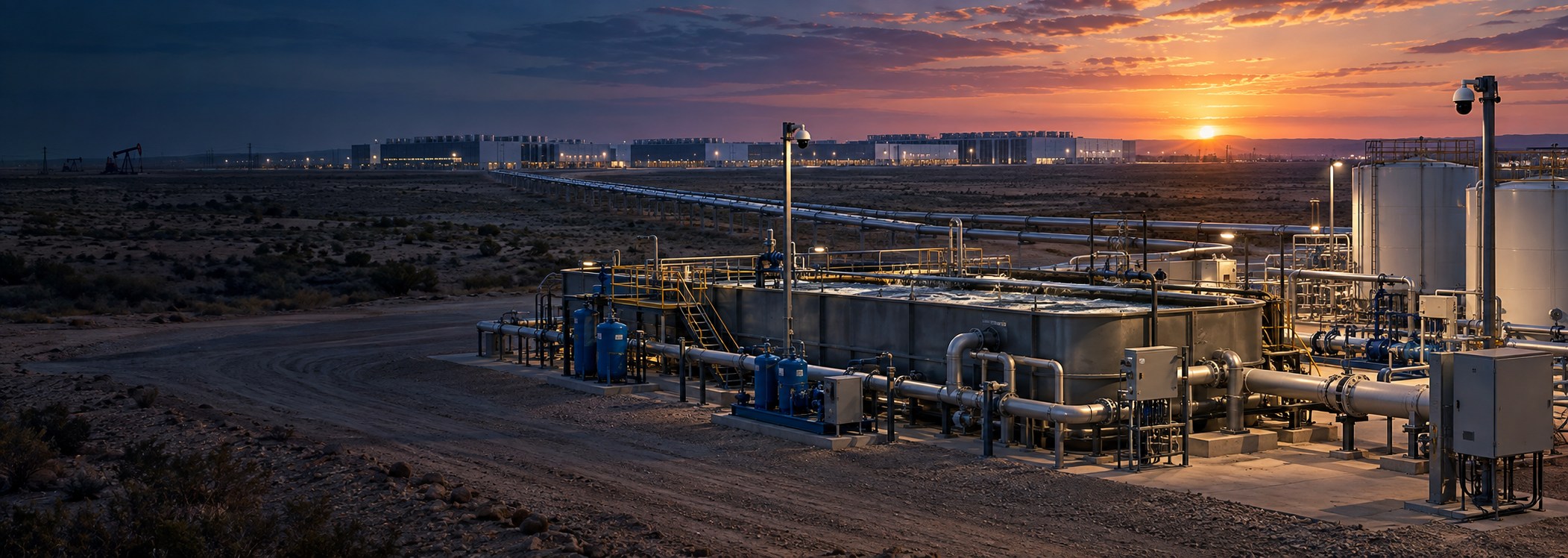
PRODUCED WATER · REMOTE OPERATIONS · DATA CENTER WATER SUPPLY
Data center developers are evaluating nontraditional water supplies as power and cooling demand grow. Produced water is abundant in oil-producing regions, but it requires a treatment train designed for the receiving system and a reliable network of remote facilities. XPC Water helps the teams operating that network see, investigate and document what happens from treatment through storage and transfer.
The gap is between a treated-water number and the operating story.
A delivery volume or a passing sample tells only part of the story. When a customer asks why a transfer slowed, why a tank level changed, or what happened before a treatment excursion, the answer may be scattered across a field spreadsheet, a PLC trend, a pump alert, a camera archive and a shift message. At remote and unmanned sites, the person answering may not have been there when it happened.
XPC Water puts the field story, equipment story and visual site story in the same time window—then gives the operator a record to review and share.
Where XPC works in the water chain
Our strongest starting point is the infrastructure we know: produced-water treatment, chemical dosing, storage and transfer. XPC reads available equipment data, structures field records and analyzes authorized camera views. The same operating view follows the water system as it serves a more demanding end customer.
What an event record actually contains
A transfer slows before a scheduled delivery.
XPC opens the time window around the first abnormal flow reading. The record shows pump status and communication health; upstream and downstream tank levels; a field entry or ticket; relevant authorized camera frames; and when the operator acknowledged and resolved the event. A camera confirms visible activity. Meter and tank data support volume reconciliation. The operator records the conclusion, including any missing source.
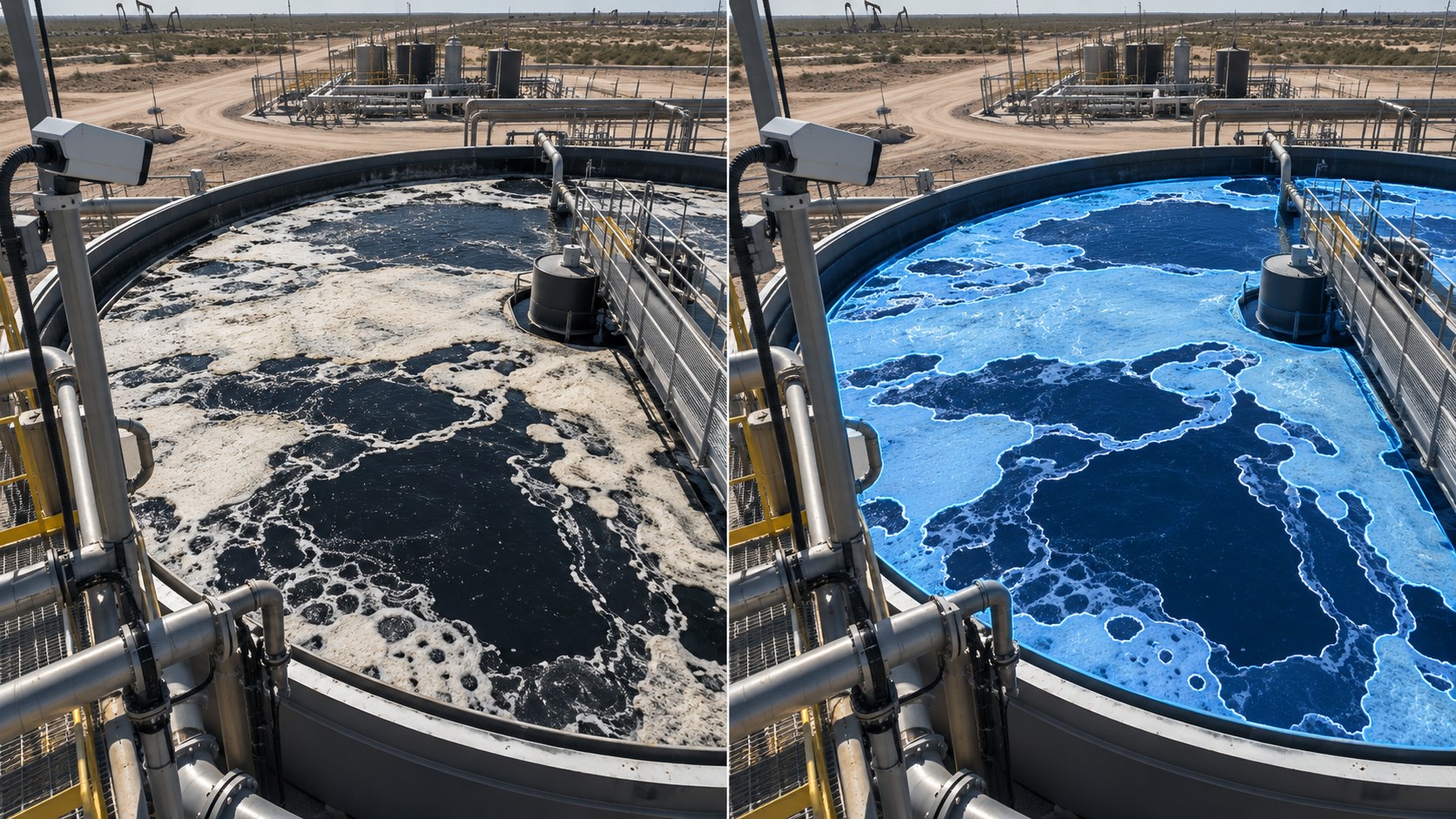
DAF conditions move outside the site's normal band.
XPC puts the measured zone coverage beside chemical-feed history, flow and the field sample or dosing entry. A visual change is a reason to investigate; it is not a laboratory determination of cooling-water quality. The reviewed record shows what changed, when the crew responded and whether the unit returned to its operating band.
A visible containment concern appears at an unmanned site.
An authorized camera flags liquid in a defined containment area. XPC aligns that frame with nearby tank, pump and transfer readings, alerts the responsible team and retains the before-and-after images for human classification and follow-up.
What the buyer gains
- Water infrastructure operator: one view across remote sites and a faster way to answer a customer's question about a specific hour.
- Treatment provider: a report built from dosing records, measurements, images and reviewed exceptions.
- Powered campus developer: a traceable account of upstream water events, with clear ownership of each observation and response.
That is an operational record. Treatment design, laboratory testing and cooling-system engineering establish the required water specifications. XPC documents the operation of the treatment and delivery process and keeps the supporting sources available for review.
How XPC supports produced-water supply for data centers
Start with the treatment and transfer facilities that must deliver water consistently. XPC connects the systems already in use at those sites and gives the water operator a single place to investigate an exception, respond and document the result.
When a water delivery is questioned
A scheduled transfer arrives late or below its expected volume. XPC shows the transfer window, pump running state, line flow, upstream and receiving tank levels, field ticket, camera frames and communication gaps. The operator can see where records agree, what needs investigation and when service returned to normal. Meter and tank data support volume reconciliation; a camera image alone does not certify volume.
The record the customer receives
- A site and device status view for the selected water facilities.
- An alert with the site, time, threshold and reading that triggered it.
- An event page linking field entries, raw readings and original and analyzed images.
- An operator-reviewed account of the condition, action, remaining uncertainty and resolution.
For a first deployment, select one facility and one repeatable exception. Measure detection time, time spent reconstructing the event, source completeness and whether the resulting report answers the water customer's question.
Start with one facility and one disputed question.
Connect one site's existing field records, PLC or MQTT readings, and approved cameras. Choose an event the team currently spends time reconstructing—pump silence, tank-level discrepancy, dosing change or visible containment. On day 45, compare how quickly the operator found the event, whether the sources agreed, what gaps remained and whether the reviewed report answered the customer's question.