 XPC Water
AI for DAF
AI for DAF: dissolved air flotation monitoring the operator can trust.
XPC watches a dissolved air flotation unit the way a good operator does: the float, the weir, the live readings and the crew’s daily sheet, all at once. When the unit leaves its normal and stays there, the operator gets one alert with the evidence already lined up. XPC does not take over the DAF. The operator makes the call.
Running today, not a roadmap
In production on produced water DAFs in the Permian Basin.
XPC has run on produced water treatment in the Permian Basin and Eagle Ford since 2018. Everything on this page is what it does on working units today, not a forecast of what AI might do one day.
The basics
What a DAF does, and why the float changes.
A dissolved air flotation unit cleans water by lifting the solids out of it. Water saturated with air under pressure is released into the tank, and the fine bubbles that form attach to particles that chemicals have already gathered into floc. The particles rise, form a float on the surface that is skimmed off, and the clarified water leaves under the weir.
That float is the best single picture of how the unit is doing, and it changes for ordinary reasons:
- The incoming load rises or its make-up changes, so more solids arrive than the dose was set for.
- Coagulant or polymer feed drops, stops, or no longer suits the water.
- Air or recycle flow falls off, so fewer bubbles carry the floc up.
- Flow through the unit jumps, so the water spends less time in the tank.
- The skimmer falls behind, or one channel of a multi-channel unit loads ahead of the rest.
An experienced operator reads most of this by eye. The trouble is that nobody can stand at every unit, and by the time treated turbidity moves, the cause is often hours old.
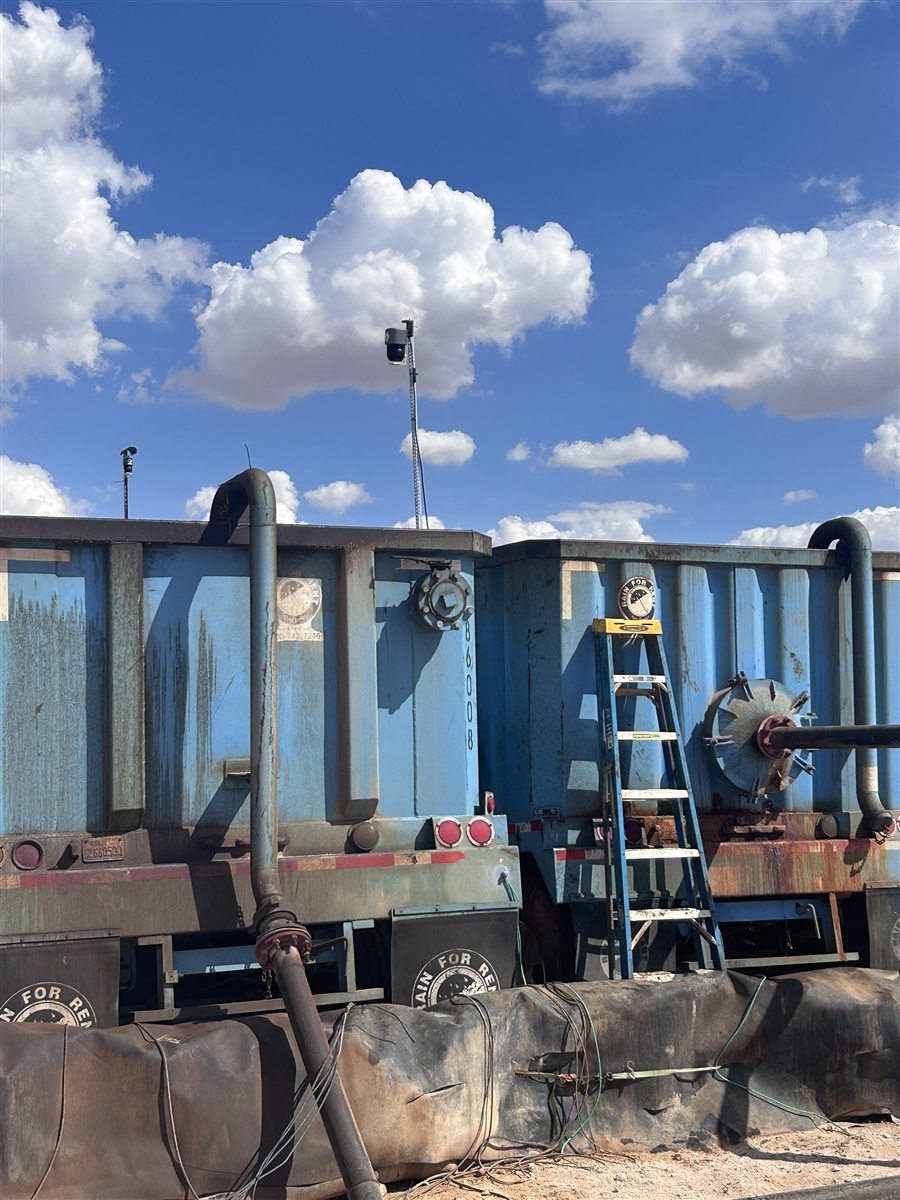
What the camera and the AI watch
The float, measured on every frame.
A camera over the unit sends frames to XPC. Our neural networks measure each frame against that unit’s own baseline, so a change in the float becomes a number you can trend instead of a judgement made from the bank.
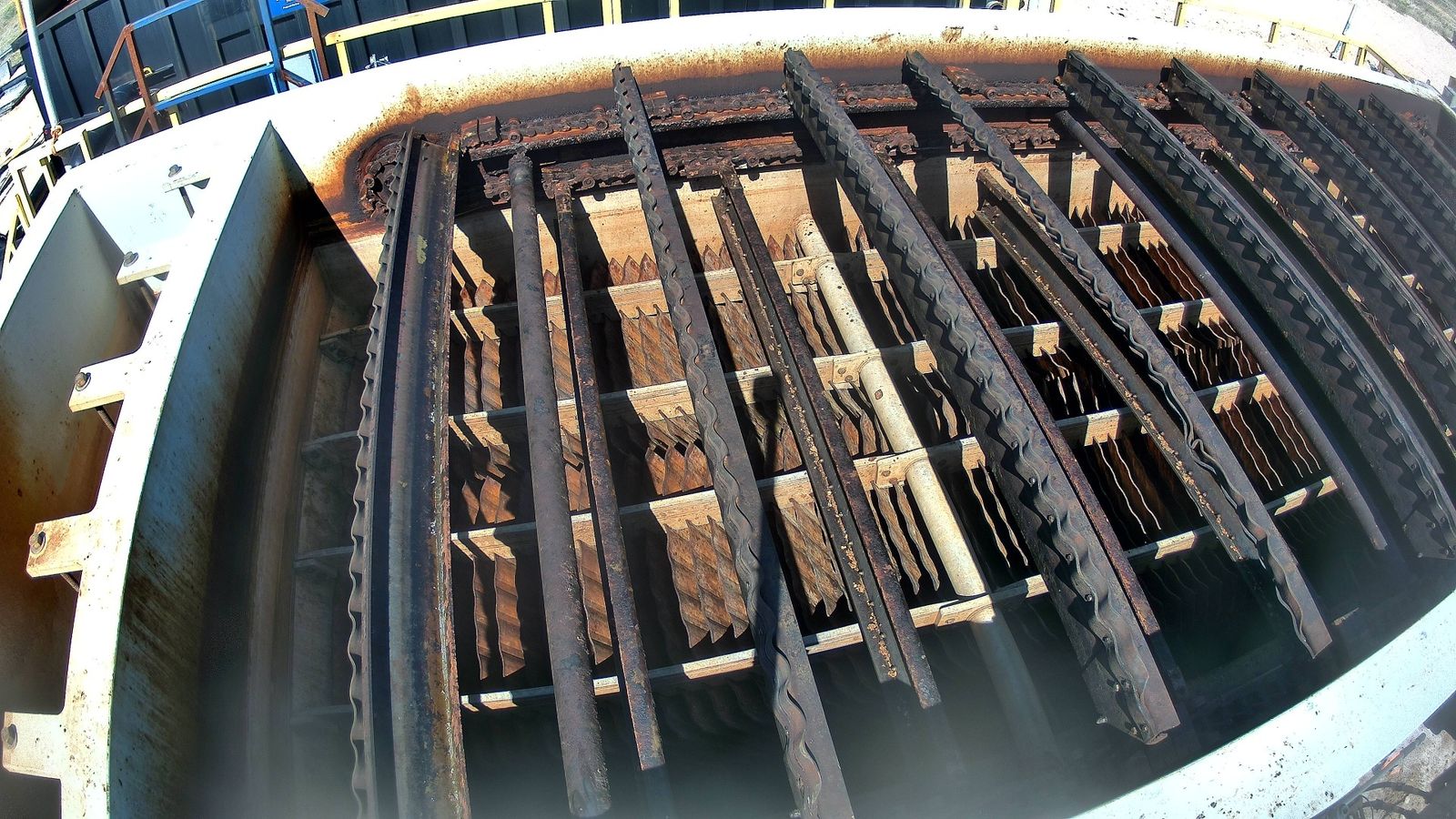
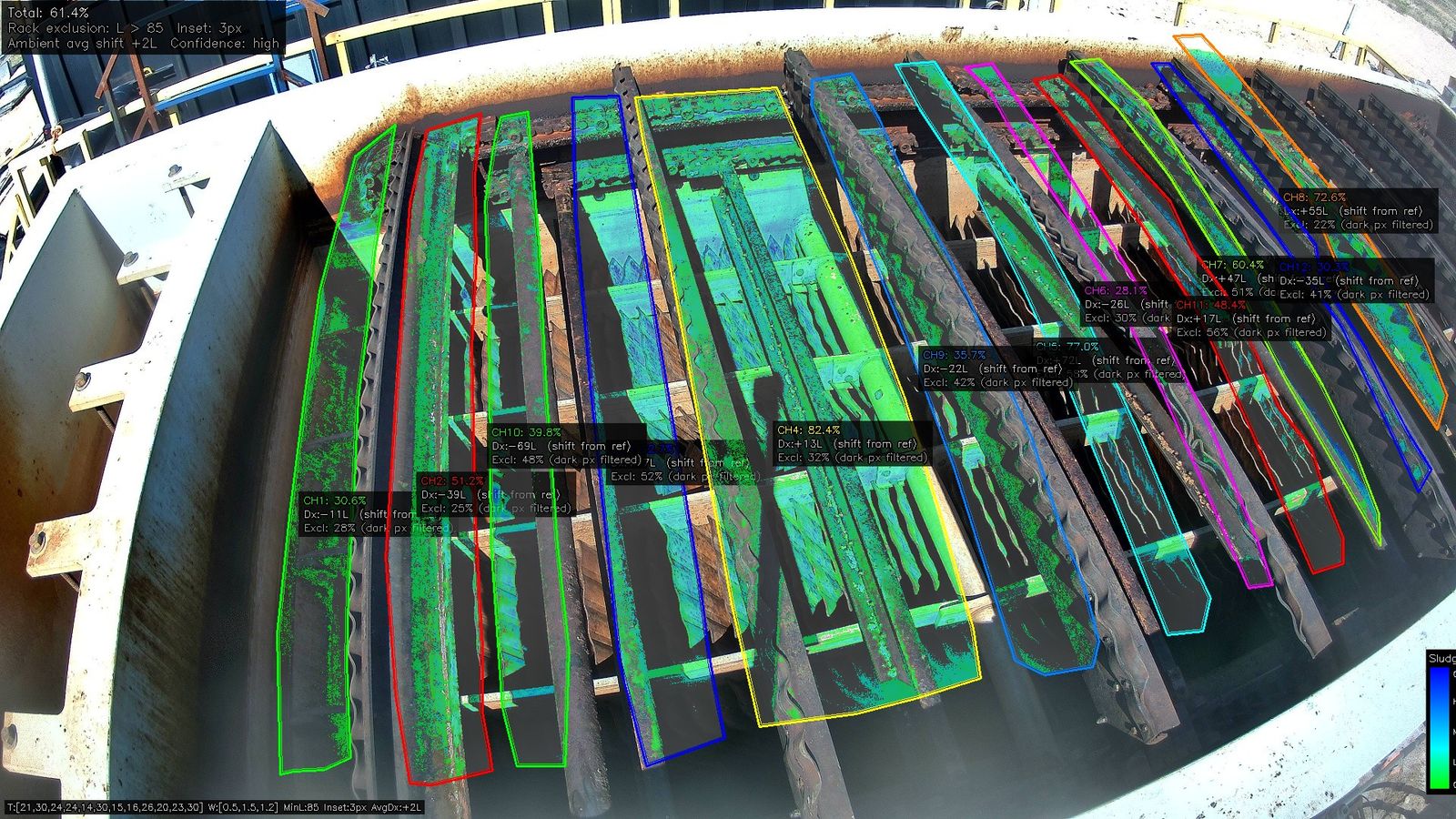
- Colour Depth Determination grades each channel of the unit separately and gives a unit total, so one loading channel shows up while the total still looks normal.
- Zone Segmentation separates sludge from water across a defined zone and reports the coverage as a percentage, comparable day to day.
- The weir: the camera can raise an alert when the weir is not clearing, from what it sees rather than from an instrument.
- Spill Detection outlines liquid on containment, pipework and the ground around the unit while it is still small.
The models are trained on the sites they run on, in the light and weather those sites actually get, and checked with the operators against examples of normal, concerning and misleading frames. Night frames with no colour in them are refused rather than guessed at, and each result carries its confidence.
SCADA readings and crew DTR sheets
The numbers behind the picture, on one timeline.
A camera alone cannot say why the float changed. XPC puts the frames on one timeline per site with the unit’s live readings and the daily treatment report (DTR) the crew already fills in. Getting messy field data and control-system data to line up is the hard part of AI on a DAF, and it is the part XPC already does every day.
From the control system
Live SCADA and PLC readings
Read directly from Siemens S7, Allen-Bradley and Modbus TCP, with no second control system to learn.
- Inlet flow and tank levels
- Treated turbidity and pH
- Chemical feed and pump status
- A sensor that freezes on one value, flagged even though it never goes offline
From the crew
The DTR sheet, read for you
The crew keeps emailing the Excel DTR they use today. XPC reads each one, files it to the right site and operating day, and checks every value with rules you can see and switch.
- Barrels treated per day
- Chemical counts and gallons used
- Readings the crew takes at the unit
- A value that cannot be read is held with its row and the reason, not dropped
A corrected copy of a sheet replaces the earlier one instead of counting twice, and a typed year such as “206” is read with the sheet’s other dates and flagged.
An alert that holds
One alert, only when the change is real.
Limits come from how this unit normally runs, set with your operators during the first week. A blip does not wake anyone.
- A reading or camera measurement has to stay out of band for several readings in a row
- Rate of change as well as fixed limits
- One event is one alert: repeats are suppressed
- Sent by text or email, with the site and the value that crossed the line
- Every evaluation logged and reviewable afterwards
A real upset, autumn 2026
Treatment stopped keeping up with the load
On a Permian DAF, treated turbidity climbed from 4 to 880 NTU while the incoming load rose and chemical per 1,000 barrels went from 5.5 to 40 gallons. About 50,000 barrels a day kept flowing through it. XPC raised it as one finding instead of three numbers on three sheets.
More chemical alone did not bring the water back.
What the operator does
The evidence arrives with the alert. The decision stays with the operator.
XPC does not change setpoints, chemical dose, air or recycle. It reads the control system and never writes back to a PLC unless you deliberately enable it. What it does is the part of the job that eats the morning: finding what changed, when, and what the camera saw.
- 1
Open the alert
Camera frames from before and now, side by side, with the measured change.
- 2
Read the window
Flow, pH, turbidity and chemical feed for the same hours, with the crew’s DTR and notes from that shift.
- 3
Make the call
Restart a pump, change a dose, send someone out, or mark it a false alarm. The operator decides.
- 4
Record and close
What it was and what was done, kept with the evidence for the shift or customer report.
Daily reports
Reports built from the record, not rebuilt by hand.
Daily, weekly and monthly reports come out of the same record the alerts use. They go out by email with an Excel workbook, on the schedule and operating day each customer wants, and an operator can send supervisors an executive summary as a workbook or a PowerPoint deck when an event closes.
- Barrels per day and per site from the DTR
- Chemical used per site and per day
- Alerts raised, labelled and closed
- A short note on the report whenever it counts something in a way that is not obvious
Equipment-neutral
Any make of DAF, the SCADA you already have.
XPC is software, not a DAF vendor’s add-on. It works with the units you run today, from any manufacturer, and with the PLCs and the sheets already on site. Nothing has to be replaced to start.
- Control systemSiemens S7, Allen-Bradley ControlLogix, CompactLogix, MicroLogix and SLC 500, and Modbus TCP, read-only.
- CamerasONVIF cameras, or one we supply, on an AIBox at the site that keeps recording through a network outage and catches up after it.
- Field dataThe Excel sheets crews already email. No new app for the crew to learn.
Security
Your data stays yours.
Each customer has its own isolated tenant, and XPC can run in our cloud or inside your own network.
More in where XPC runs.
The 45-day validation
Prove it on one DAF before you buy anything bigger.
We do not quote a savings percentage. We measure what changes on one of your units, with your crew, and report it in your numbers.
- One unit and read access to its SCADA / PLC
- One camera position, or we supply one
- No long-term commitment and no credit card
Questions
AI DAF monitoring: common questions.
What does the AI watch on a DAF unit?
Camera frames of the float and the weir. Colour Depth Determination grades every channel of a multi-channel unit on its own and gives a unit total, Zone Segmentation measures sludge coverage across a defined zone, and Spill Detection outlines liquid outside containment. Each frame is compared with that unit's own normal, not a generic threshold.
Does XPC control the DAF or change its setpoints?
No. XPC reads the control system; it does not drive it. Integrations start read-only and nothing writes back to a PLC unless you deliberately enable it. The operator decides what to do about an alert.
Do we need new instruments or a new SCADA system?
No. XPC reads the PLCs you already have (Siemens S7, Allen-Bradley and Modbus TCP) and the daily sheets your crew already emails. A validation needs one camera position, and we can supply the camera.
What happens when the site loses its connection?
The AIBox at the site keeps recording and buffers locally, then syncs when the link returns. It can use more than one cellular carrier, Starlink, or the site's own network.
Does it work on any make of DAF?
Yes. XPC is software, not a DAF vendor's add-on. It reads the PLCs and the crew sheets already on site and works with units from any manufacturer.
Where is our data kept?
In your own isolated tenant in XPC's US-hosted cloud, or inside your own network if you run XPC on premise. Sign-in can use Microsoft Entra ID, Okta or XPC multi-factor authentication.
How do we try it before committing?
With a 45-day validation on one DAF unit and one camera view: success measures agreed in writing on day 1, no long-term commitment and no credit card. At day 45 you have every alert labelled by your crew and a go / no-go in your own numbers.
Running ClO2 as well? See AI for ClO2 (chlorine dioxide) treatment, or the technology behind both.