 XPC Water
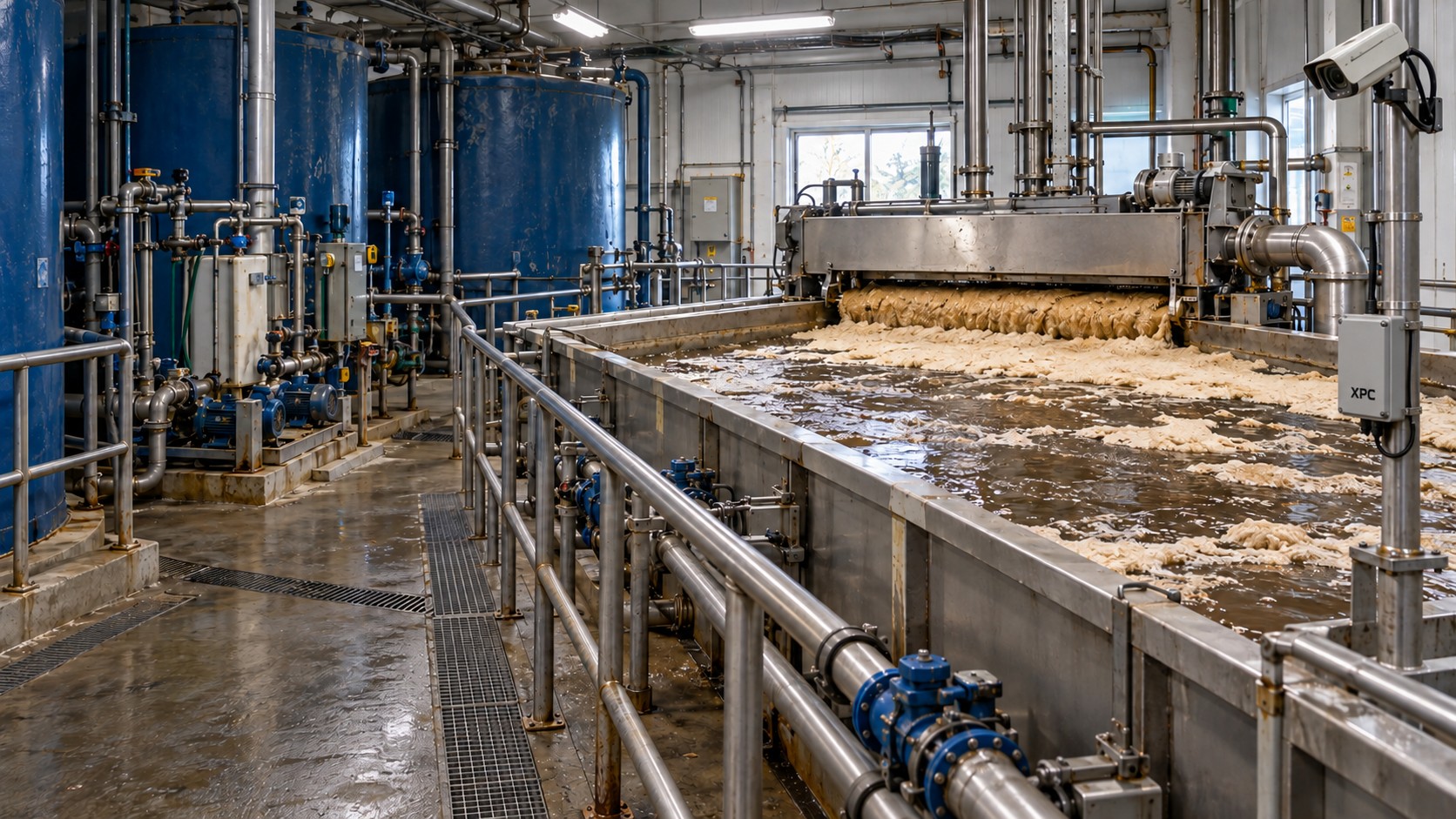
What the tank showed
Authorized camera views, a consistent region of interest and a site-specific baseline. Confirm that camera movement, lighting or a dirty lens did not create the apparent change.
FIELD GUIDE / DAIRY WASTEWATER
A changed float surface is a reason to investigate. Bring the camera view, equipment readings and shift record together before deciding what happened.
Open the operator checklistSTART WITH THE OPERATING QUESTION
Dairy wastewater can change between production runs, product changeovers and cleaning cycles. When the DAF surface changes, the useful question is what else changed at the same time: incoming flow, equalization, pH, chemical feed or float removal.
XPC brings available camera images, SCADA readings and operator entries into the same time window. Your wastewater lead reviews the evidence, records the response and checks the follow-up result.
WHAT THE IMAGE CAN TELL YOU
A site-specific camera model can track visible zones, surface coverage and changes within its trained view. Use the result alongside the process record.
A camera image does not establish COD, BOD, TSS, fats/oils/grease concentration or discharge compliance. Those questions require the appropriate sampling, testing and responsible review.
OPERATOR CHECKLIST
Use the signals already available at your site. A missing reading should stay visible as a gap in the investigation.
| What you notice | What to review alongside it | What to retain |
|---|---|---|
| The float surface changes | Same camera zone and lighting; influent flow; recent production or cleaning event; installed pH readings; chemical feed record. | Before/after images, process trends, operator observations and any follow-up sample. |
| Float appears to accumulate | Skimmer state, run schedule, operator inspection and sludge removal record. Check equipment in the field under the site's procedures. | The observed build-up, inspection finding, maintenance or operating action and next check. |
| Foam increases | Cleaning log, incoming flow and pH trend; compare the current view with normal operation. Foam alone does not identify its cause. | Time window, related entries and the operator's confirmed finding. |
| Chemical use rises | Actual chemical quantities and treated volume for the same period; product concentration and feed records where available; any meter gaps. | The calculation, source quantities, assumptions and treatment results used for comparison. |
| A downstream sample is outside the site target | Sampling time and point; relevant treatment/residence-time window; flow, pH, dosing, float removal and upstream events. | Lab result, operating timeline, action and follow-up result. Follow the site's reporting procedure. |
ONE INVESTIGATION / THREE RECORDS
Authorized camera views, a consistent region of interest and a site-specific baseline. Confirm that camera movement, lighting or a dirty lens did not create the apparent change.
Available flow, level and pH readings, chemical feed data, recycle pressure and skimmer status. Mark stale or missing readings rather than filling them with assumptions.
Production and cleaning events, sample results, operator checks, adjustments and maintenance notes. Record who reviewed the event and what they confirmed.
ILLUSTRATIVE REVIEW
Suppose a DAF camera shows more surface coverage after a cleaning cycle. The incoming flow trend has also risen, while the available feed record shows no change.
That sequence is useful context. It does not prove that feed was insufficient or that cleaning caused the event. The operator checks the equipment, reviews the relevant sample and records the action under the site's procedures.
XPC keeps the sequence together so the next shift can see what was observed, what was checked and what remains uncertain.
THE EVENT RECORD
45-DAY VALIDATION
Choose one DAF train and one recurring event. Agree the camera view, available readings, baseline and success measures with the wastewater lead before starting.
Begin with an authorized camera, existing process readings and the operator record. XPC reads the control system; operating decisions and controls remain with your team.
Review flagged changes against operator findings. Track missed events, false alerts, camera availability and the readings needed to explain each event.
Compare the time to find a relevant image, reconstruct an event and prepare a reviewed shift report. Record data completeness and the team's ability to use the output.
XPC supplies monitoring, analytics and investigation support. Treatment design, chemical selection, dosing changes, laboratory analysis and compliance decisions stay with the facility and its qualified treatment partners.
TALK THROUGH YOUR DAF WORKFLOW
Show us one recurring DAF issue, the readings you have and the record you need. We can scope a 45-day validation around that workflow.
Discuss dairy DAF monitoring