 XPC Water
Technology
Built for sites that are hard to reach and harder to prove.
Where the software runs, how it reads your control system, what the box at the site does when the network drops, and how alerts and reports reach your people.
Where it runs
Our cloud or your network. Same platform, same features.
Most platforms make you choose them or your own infrastructure. XPC runs either way, from the same codebase.
Option 1 · Hosted
XPC Cloud
We run it. You get a browser and a login, and nothing to maintain.
- Hosted in a carrier-neutral US colocation facility
- Redundant power with generator backup and precision cooling
- Each customer in an isolated tenant environment
- Single sign-on with Microsoft Entra ID or Okta, or XPC multi-factor authentication
- Encrypted in transit; role-based access across six built-in roles
- Updates and backups handled by us
The fastest way to start. Most customers begin here and stay.
Option 2 · On premise
Inside your own network
The same platform as a Docker container on your servers. Your data never leaves your perimeter.
- Deploys as a container into your existing environment
- No inbound access required from the internet
- Your database, your storage, your backup policy
- Single sign-on against your own directory, or XPC multi-factor authentication
- Runs alongside your control network without touching it
- Same features, same release train as the hosted product
For operators whose security policy will not allow site data to leave the building.
These certifications are held by the colocation facilities that host XPC, and describe the environment the platform runs in.
SCADA
Every site on one screen.
XPC reads your PLCs directly and puts the live process picture for every site behind one sign-on. No VPN for each location, and no second control system to learn.
TANK LEVEL62.4 %
INLET FLOW38.2 bbl/min
P-101 TRANSFERRUNNING
TREATED pH7.4
- Siemens S7Direct tag polling from S7 controllers over the site network.
- Allen-BradleyControlLogix and CompactLogix by tag name over EtherNet/IP, and MicroLogix and SLC 500 data files.
- Modbus TCPRegister mapping for the rest of the equipment on the pad.
- ONVIFCameras discovered and controlled through the standard, not a vendor app.
- MQTT / TLSEverything the box collects, encrypted end to end on the way out.
Integrations start read-only. XPC watches your control system; it does not drive it, and nothing writes back to a PLC unless you deliberately enable it.
Field records
The spreadsheets crews already fill in, read for you.
Operators keep emailing the daily sheets they already use. XPC reads each one, files it to the right site, checks it, and puts it on the same timeline as the readings and the camera.
- 54,459 field records read so far
- Each file filed to its site and operating day
- Checks on every value, with the reason when one is rejected
- The same data feeds the recurring customer report

Edge hardware
A box that assumes the network will fail.
The AIBox sits at the site, talks to the cameras and the PLCs, and keeps working when the link drops. Built and tested by the same people who install it.
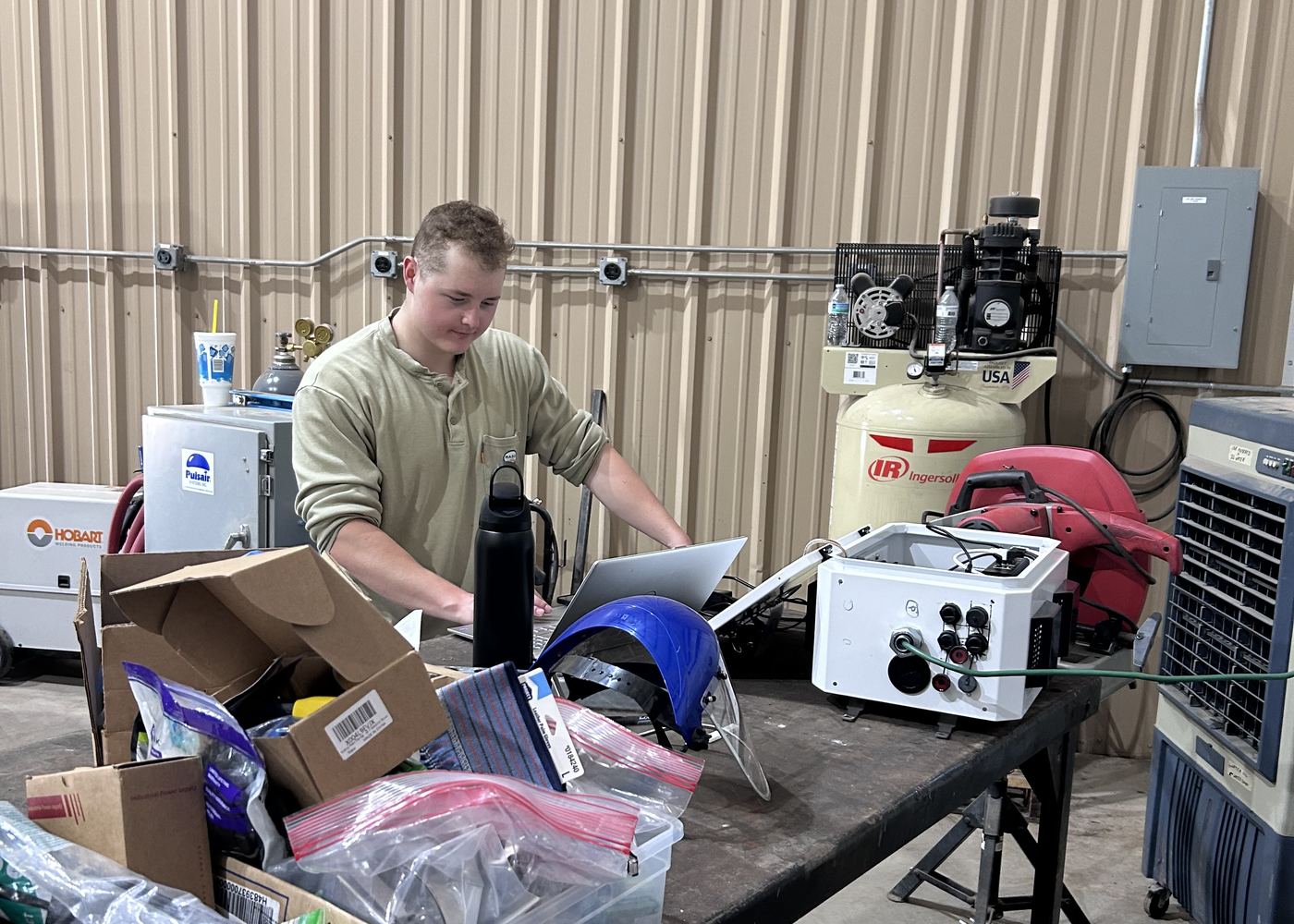

Three independent paths and local buffering mean a site keeps recording through an outage and catches up afterwards, instead of leaving a hole in the record on the day someone asks about it.
Alerts and reports
Alerts on your limits. Reports nobody has to rebuild.
Set a limit on any reading XPC receives — level, flow, pressure, chemical feed, a camera measurement, or a device going quiet. When it trips, the alert goes out by text or email with the site and the value that crossed the line.
- Per-device rules, set by you
- A change must hold for several readings, so a blip does not wake anyone
- Rate-of-change as well as fixed limits
- Repeat suppression, so one event is one alert
- Every evaluation logged and reviewable
Reports
Built from the record, not from memory
Daily, stage and monthly reports come out of the same record the alerts use, delivered by email with an Excel workbook, on the schedule and operating day each customer wants.