 XPC Water
AI for ClO2
AI for ClO2: chlorine dioxide treatment, stage by stage.
A ClO2 job writes its story one stage at a time: dose, residual, demand and chemical used, logged by a crew working around the clock. XPC reads every stage as it arrives, puts it beside the site’s live readings, and tells the operator when the residual leaves the job’s normal and stays there. XPC does not run the generator. The operator makes the call.
Running today, not a roadmap
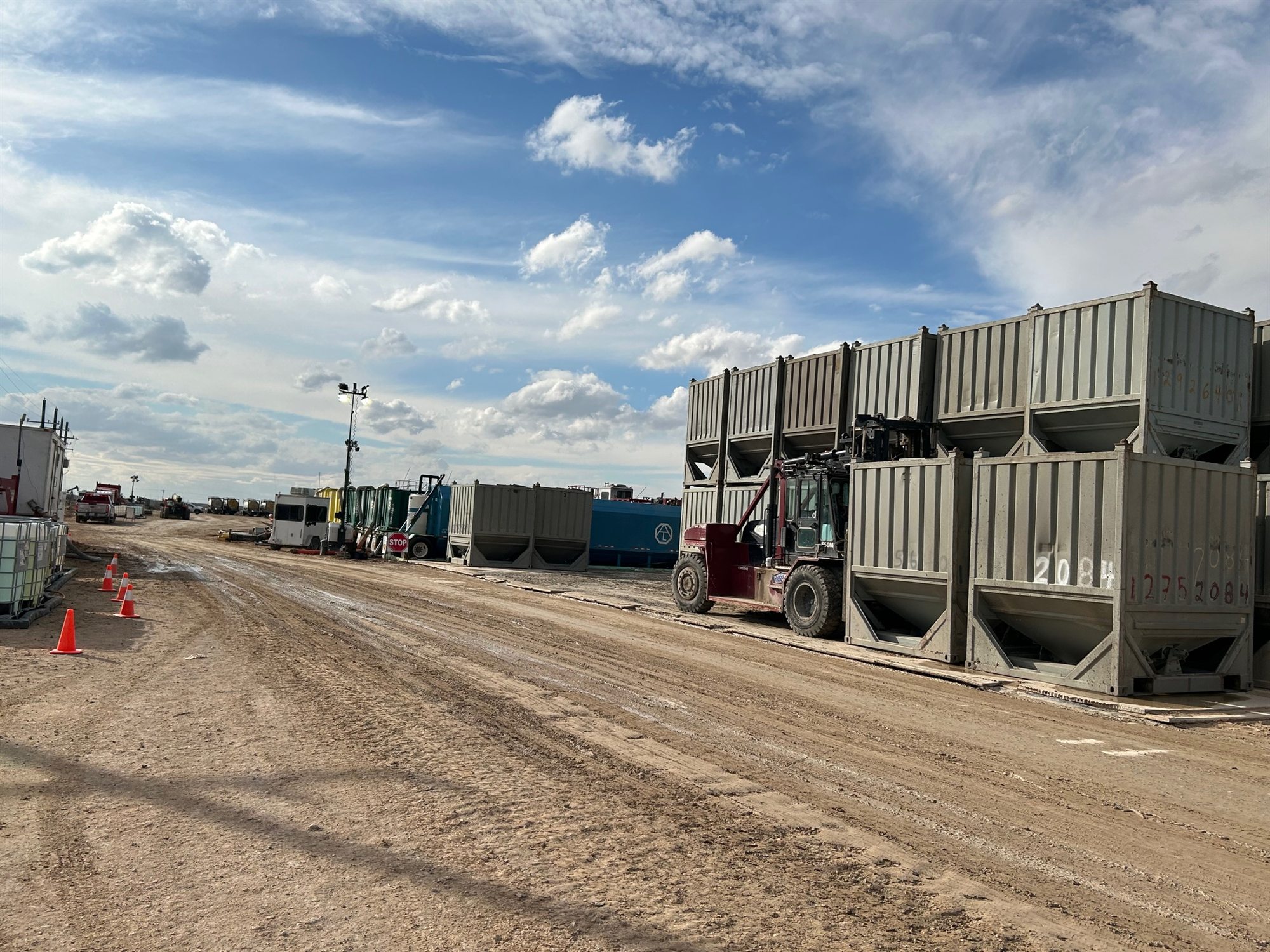
In production on ClO2 frac water treatment in the Permian Basin.
XPC has run on produced water treatment in the Permian Basin and Eagle Ford since 2018, including chlorine dioxide treatment of water for frac jobs. Everything on this page is what it does on working jobs today.
The basics
What chlorine dioxide treatment does, and why the residual moves.
Chlorine dioxide is generated on site from precursor chemicals and dosed into the water headed for the frac. It kills bacteria and oxidises contaminants such as iron and sulfides. The water uses up part of the dose (its demand), and what is left over is the residual the crew measures.
The residual is how the crew knows the dose is right, and it moves for ordinary reasons:
- The source water changes between stages or between tanks, so its demand changes.
- The dose is raised or lowered, on purpose or because a feed falls off.
- A precursor runs low or a pump stops.
- Rate changes on the frac move more water through in less time.
A crew on a 24-hour job sees each stage as it happens. What is hard is seeing the whole job, and the jobs next to it, at once, and catching a residual that drifts and holds before the stage report goes to the customer.
Crew sheets
Every stage on the Frac Log, read for you.
The crew keeps emailing the Excel sheets they already fill in. XPC reads each one, files it to the right well, pad and operating day, checks every value with rules you can see and switch, and keeps the reason when one is rejected. Turning field sheets into clean data is the hard part of AI on a ClO2 job, and it is the part XPC already does every day.
Frac Log
Stage by stage
- Stage start and end time
- Dose, residual and demand
- Chemical gallons used per stage and per day
- A stage counts on the operating day it ends
Shift paperwork
Checklists and assessments
- Shift change checklists and job assessments
- A corrected copy of a sheet replaces the earlier one instead of counting twice
- A value that cannot be read is held with its row and the reason
- The site is found from the job code, even when the form does not name it
What the AI watches
The residual, against this job’s own normal.
A residual that looks fine on one job can be a problem on the next. XPC’s models learn each job’s normal from its own stages and flag a change that holds, not a single odd value.
A real upset, September 2026
Residual jumped and stayed high
On a ClO2 frac job the treated residual ran 2–5 ppm for the first stages, jumped to 13–17 ppm at stages 3 and 4, and held near 10 ppm for the next 14 stages while the dose was lowered from 22 to 18 ppm. XPC’s residual model flagged the spikes.
Beside the stages
SCADA readings and the camera
Where the site has PLCs, XPC reads them directly (Siemens S7, Allen-Bradley, Modbus TCP), read-only, and lines them up with the stages.
- A pump that stops for several readings raises a critical alert
- A sensor stuck on one value is flagged even though it never goes offline
- Spill Detection outlines liquid on containment and pipework around the totes
An alert that holds
One alert, only when the change is real.
Limits come from how the job normally runs, set with your operators. A single odd stage does not wake anyone.
- A residual or reading has to stay out of band for several readings or stages in a row
- One event is one alert: repeats are suppressed
- A sheet with problems reaches a person as one message per file, not one per row
- Sent by text or email, with the job, the stage and the value that crossed the line
What the operator does
The evidence arrives with the alert. The decision stays with the operator.
XPC does not change the dose or run the generator. It reads the records and the control system, and never writes back to a PLC unless you deliberately enable it.
- 1
Open the alert
The stages before and after the change, with dose, residual and demand.
- 2
Read the window
Pump and tank readings for the same hours, and the crew’s notes from that shift.
- 3
Make the call
Change the dose, check a precursor, send someone to the skid, or mark it expected.
- 4
Record and close
What it was and what was done, kept with the evidence for the stage or customer report.
Stage and daily reports
The stage report writes itself.
Reports come out of the same record the alerts use, by email with an Excel workbook, on the schedule each customer asks for.
- Stage summaries per well, sent as the Frac Log arrives
- Daily reports on the customer’s operating day, such as 6 am to 6 am on a job that runs around the clock
- Chemical used per job and per day
- A short note on the report whenever it counts something in a way that is not obvious
Security
Your data stays yours.
Each customer has its own isolated tenant, and XPC can run in our cloud or inside your own network.
More in where XPC runs.
The 45-day validation
Prove it on one ClO2 unit first.
We do not quote a savings percentage. We measure what changes on one of your units, with your crew, and report it in your numbers.
- No long-term commitment and no credit card
Questions
AI ClO2 monitoring: common questions.
What does XPC track on a ClO2 job?
Every stage the crew logs: start and end time, dose, residual, demand and the chemical used, plus the shift change checklists and job assessments. Where the site has PLCs or a camera, their readings and frames go on the same timeline.
Does XPC run the ClO2 generator or change the dose?
No. XPC reads the records and the control system; it does not drive them. Integrations start read-only and nothing writes back to a PLC unless you deliberately enable it. The operator decides what to do.
What kinds of alerts does it raise?
A residual that moves away from the job's normal and holds, a reading that breaks a limit you set, a pump or device that stops or goes quiet, and a value on the crew's sheet that cannot be read, with the row and the reason. Several hits from one file reach a person as one message.
How do stage and daily reports reach the customer?
By email with an Excel workbook, built from the same record the alerts use. Stage summaries go out per well, and daily reports follow the operating day each customer wants, such as 6 am to 6 am on a job that runs around the clock.
Do we need a camera or SCADA on a ClO2 job?
No. XPC starts from the Frac Log and shift sheets the crew already emails. Where the site has PLCs or a camera, their readings and frames are added to the same timeline.
Where is our data kept?
In your own isolated tenant in XPC's US-hosted cloud, or inside your own network if you run XPC on premise. Sign-in can use Microsoft Entra ID, Okta or XPC multi-factor authentication.
How do we try it before committing?
With a 45-day validation on one ClO2 unit: success measures agreed in writing on day 1, no long-term commitment and no credit card. At day 45 you have every alert labelled by your crew and a go / no-go in your own numbers.
Running DAF as well? See AI for DAF (dissolved air flotation), or the technology behind both.